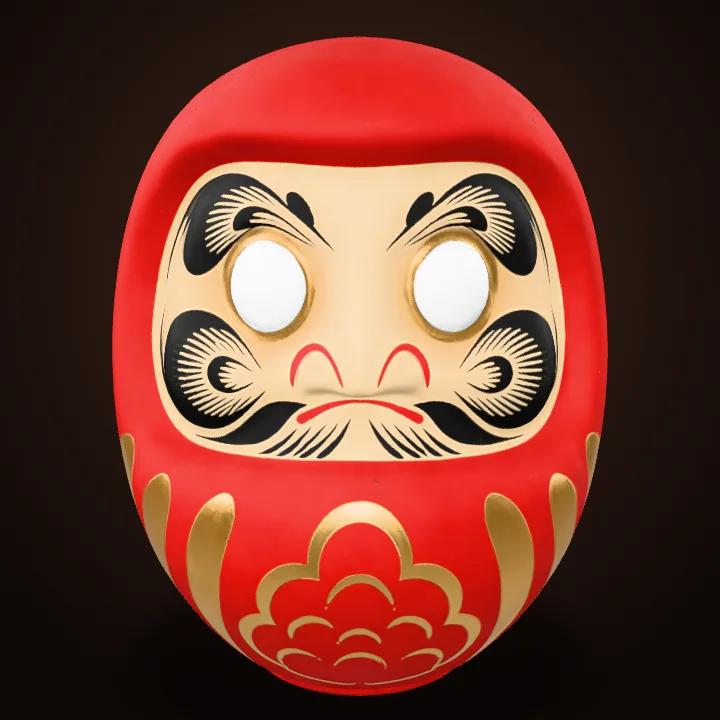
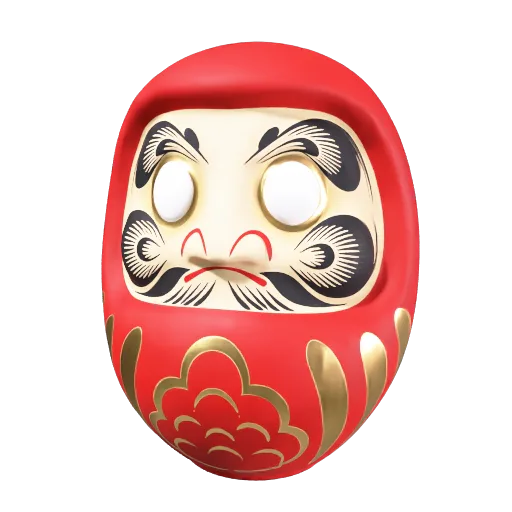
There is no single national assembly line. Start with Takasaki's paper body, then watch the sequence split into carved wood, a sounding insert and raised hemp fiber.
Four process scopes · sources checked 26 August 2026
THE SHORT ANSWER
The familiar paper process is real. It is not universal.
Takasaki gives the clearest end-to-end paper sequence: form, dry, weight, undercoat, color, hand-finish.
Regional identity can enter at a completely different stage: timber selection in Aomori, a sounding element in Mihara, or hemp fiber applied to the Matsumoto face.
Making and painting are different search needs. This page follows published production evidence. If you want a visitor activity, use the source-owned workshop finder.
DIY DARUMA · CHOOSE THE OBJECT FIRST
How should I make a Daruma at home?
Short answer: first decide whether you want to paint a prepared body, fold a paper interpretation or study how a traditional object is produced. They need different materials, sources and rights.
01 · PAINT A BLANK
Start after the body is made.
This is the simplest home route. Buy a blank regional body or complete kit, then verify the surface, included paint, drying guidance and delivery with its seller.
Use the named creator's one-square origami tutorial for folding. Canon's downloadable Daruma is a multi-sheet cut-and-assemble paper craft, not an origami model.
Traditional production may include forming, drying, weighting, coating and hand finishing—or carved wood. The Atlas compares four public process records without copying undisclosed workshop know-how.
Rights boundary: follow each creator or publisher's current terms. These links do not grant permission to republish diagrams, sell Canon's template, copy a living artisan's brushwork or reproduce undisclosed production methods.
DARUMA PAINTING · THREE DIFFERENT NEEDS
Do you mean painting a doll—or a painting of Daruma?
Short answer: the English phrase is ambiguous. Pick the object first, because a home kit, a workshop and a museum portrait need different instructions, sources and expectations.
01 · AT HOME
Paint a prepared Daruma doll.
Start with a blank or prepared body. This is surface decoration—not the full forming, drying, weighting and coating process.
In museum records, “Daruma” can name the Zen patriarch rather than the rounded wishing doll. Start with the object record, date, medium and institution.
Boundary: these routes resolve the search intent. They do not reproduce an artisan's protected design, promise workshop availability or identify an unsigned artwork.
Reference boundary: these are AI-assisted views rendered from the Atlas study models. They are not photographs, scans, maker-authenticated replicas, vector downloads or a license to trace a workshop's exact marks. Source used for the regional cue: Takasaki City — About Takasaki Daruma.
PROCESS PLAYER · FOUR SOURCE SCOPES
Follow one object from material to finish.
Each rail stops where its source stops. A short rail means the source documents only a distinctive step—not that the missing work never happens.
Takasaki · Gunma高崎だるまInterpretive 3D study · not a workshop object
Paper pulp / papier-mâché with a weighted baseEnd-to-end cooperative process account
A modern paper-pulp body can be vacuum formed while the face and lettering remain hand finished.
01
BodyForm the paper shell
The cooperative contrasts an older method—paper applied sheet by sheet over a wooden form—with today's mainly vacuum-formed paper pulp.
02
DryRelease and sun-dry the body
Water is drawn from the pulp in the mold; the hardened body is removed and dried.
03
BalanceAttach the hetta weight
A bottom weight called hetta gives the Takasaki form its self-righting action.
04
GroundApply a white gofun undercoat
A shell-derived white ground prepares the paper body before the main color.
05
ColorApply the body color
The cooperative describes red coating by dipping or spraying in current production, contrasting it with older brush application.
06
HandPaint face, gold and words
Face shading, eye whites, nose, mouth, gold decoration, wishes, eyebrows and beard are finished by hand.
Evidence boundary: This is the Gunma cooperative's account of Takasaki production. It is not a national recipe, a workshop audit or proof that every maker uses one identical paint system.
“Not stated” is a result, not a defect. It prevents one detailed Takasaki account from silently filling gaps in another region's record.
Four regional Daruma process records compared by body, insert, surface and hand finish
Process field
Takasaki DarumaTakasaki · Gunma
Utōbori DarumaAomori · Aomori
Mihara DarumaMihara · Hiroshima
Matsumoto DarumaMatsumoto · Nagano
Body formation
Older layered paper over wood; mainly vacuum-formed pulp today
Cut, split, shade-dried, roughed and carved wood
Papier-mâché base
Not stated by this source
Weight or insert
Bottom weight called hetta
No hollow insert described
Bell or pebble inside
Not stated by this source
Surface preparation
Gofun undercoat, then body color
Color after carving
Not stated by this source
Not stated by this source
Distinctive hand finish
Face, gold, wish text, brows and beard
The carving responds to each natural split
Face painting is named
Black-dyed hemp shaped with nikawa adhesive
ALL FOUR · STATIC SOURCE RECORD
Read every process without operating the player.
Each record names its evidence scope first. The Atlas never upgrades a material note into a full production recipe.
01
Takasaki · Gunma
Takasaki Daruma
高崎だるま
End-to-end cooperative process account
A modern paper-pulp body can be vacuum formed while the face and lettering remain hand finished.
Body
Form the paper shell
The cooperative contrasts an older method—paper applied sheet by sheet over a wooden form—with today's mainly vacuum-formed paper pulp.
Dry
Release and sun-dry the body
Water is drawn from the pulp in the mold; the hardened body is removed and dried.
Balance
Attach the hetta weight
A bottom weight called hetta gives the Takasaki form its self-righting action.
Ground
Apply a white gofun undercoat
A shell-derived white ground prepares the paper body before the main color.
Color
Apply the body color
The cooperative describes red coating by dipping or spraying in current production, contrasting it with older brush application.
Hand
Paint face, gold and words
Face shading, eye whites, nose, mouth, gold decoration, wishes, eyebrows and beard are finished by hand.
Evidence boundary: This is the Gunma cooperative's account of Takasaki production. It is not a national recipe, a workshop audit or proof that every maker uses one identical paint system.
Complete sequence in a 2025 prefectural craft profile
The Daruma begins as split timber, not as a hollow paper shell.
Cut
Cut the raw timber
Aomori Prefecture begins the listed production sequence with cutting the raw wood.
Split
Split the wood
The timber is split so the craft can retain and respond to the natural break.
Season
Dry it in shade
The official sequence specifies shade drying before shaping and carving.
Block
Rough out the form
The dried piece is laid out and reduced to the working block.
Carve
Carve the rising figure
The slender, forward-looking Daruma is cut from the individual block.
Color
Add color
Coloring follows carving in the prefecture's stated sequence.
Evidence boundary: The sequence comes from Aomori Prefecture's 2025 profile. It does not license copying a named artist's sculpture, crack pattern, tool marks or composition.
Materials and three workshop stages; not a full factory sequence
A sounding element is placed inside the paper body before the face is finished.
Base
Build the base
Hiroshima Prefecture names base making as the first stage in its full making-experience description.
Sound
Insert a bell or pebble
The documented material list and experience description place a sounding element inside the body.
Face
Paint the face
Face painting completes the three stages named by the prefecture for the full experience.
Evidence boundary: The prefectural page documents materials and experience stages. It does not publish every workshop preparation, drying, coating or assembly detail, so those gaps stay unfilled here.
Raised hemp fiber is shaped into brows and beard instead of relying on brushwork alone.
Fiber
Prepare black-dyed hemp
The continuing maker identifies black-dyed hemp as the material used for the physical hair.
Adhere
Work with nikawa adhesive
The fiber is attached while working with nikawa, a traditional animal glue.
Shape
Form brows and beard
The hemp is shaped into the raised eyebrows and beard that distinguish the Matsumoto face.
Evidence boundary: The continuing maker describes its distinctive fiber finish, not a complete production sequence. The Atlas does not infer the missing body, drying or coating steps.
The familiar Takasaki process forms a paper body, dries it, adds a bottom weight, applies a white undercoat and body color, then finishes the face and lettering by hand. That is one documented regional process, not a recipe for every daruma in Japan.
Are all daruma dolls made from papier-mâché?
No. Most records in the current Daruma Atlas use a paper-based body, but Aomori Prefecture documents Utōbori Daruma cut, split, shade-dried, carved and colored from wood.
Are daruma dolls completely handmade?
It depends on the stage and maker. The Gunma cooperative says modern Takasaki bodies are mainly vacuum formed, while the face is still finished one by one by hand. Other regional processes differ.
What is inside a daruma doll?
There is no single answer. The Takasaki process attaches a bottom weight called hetta. Hiroshima Prefecture documents a bell or pebble inside Mihara Daruma. A carved Utōbori Daruma is not a hollow paper shell.
What does “Daruma painting” mean?
It can mean painting a prepared wishing doll at home, booking a hands-on doll-painting experience in Japan, or studying a historic ink portrait of Bodhidharma. Choose the object and purpose before following instructions or travel advice.
How can I make a Daruma doll at home?
Choose the project first. Paint a prepared blank for the simplest three-dimensional route, follow a named creator for origami, or study the traditional production sequence without treating public evidence as a replica manual.
Is an origami Daruma the same as a traditional Daruma doll?
No. Origami is a paper interpretation with its own designer and folding instructions. A traditional wishing doll may use a formed and weighted paper body, while a printable paper craft can use multiple cut-and-assemble sheets.
Is painting a blank daruma the same as making one?
No. A painting experience may start with a prepared blank body. Full body forming, drying, weighting, coating and finishing are separate stages. Use the workshop finder to check what a current experience actually includes.
Does the process player reproduce a workshop's exact technique?
No. It translates named public records into bounded English process rails. It does not reveal undisclosed workshop know-how, authenticate an object or grant rights to copy an artisan's exact form, marks or finish.
How do I draw a Daruma from the side or back?
Choose one of the 15 regional studies in the drawing reference, then switch between front, right, back and left fixed views. Block the silhouette first, add only source-bounded regional cues and use the full 3D file when a static angle is not enough.
EVIDENCE AND RIGHTS BOUNDARY
A process map is not a replica manual.
Scope: the English rails paraphrase the named public records and preserve their gaps.
Object: the images are existing interpretive 3D studies, not photographs, scans or authenticated workshop objects.
Know-how: no undisclosed workshop technique, measurement, protected motif, tool mark or exact artisan finish is claimed or transferred.
FROM PROCESS TO PLACE
Turn the form, then follow the responsible source.